
How to Search Criminal Dockets
Search by court level first, name second. Felonies belong to the 38th District Court. The 38th Judicial District Clerk keeps those records. Class A and B misdemeanors sit with the Uvalde County Clerk. Those cases are heard in the constitutional County Court. Each justice court and municipal court keeps its own Class C or traffic docket. Texas has no single statewide trial-court search. Picking the right office is the step that makes a docket search work.
A cause number is the best identifier. Without one, gather the full party name and the likely filing year. Add the charge level and the court.
- Read the notice or filing and identify the court and cause number.
- Check the proper local record route or sign in to re:SearchTX for eligible electronic records.
- Match the court, filing date, case style, and status before relying on a result.
- Open the chronology and distinguish a past setting from the newest setting or signed order.
- Ask the holding clerk for the docket sheet, public document, or certified disposition when the screen is incomplete.
A separate Uvalde County case search overview compares the local and statewide routes.
Uvalde County Felony Docket Desk
Need a felony docket from the 38th Judicial District? The district criminal desk handles both current and older Uvalde County felony cases. Christina J. Ovalle served as district clerk in September 2026, per the public preservation plan. That plan lists a viewing station. Anyone can read digitized court records there on site. Visit the office at 100 North Getty Street, Suite 15, Uvalde, Texas 78801. The main number is (830) 278-3918.
38th Judicial District Clerk
100 North Getty Street, Suite 15
Uvalde, TX 78801
(830) 278-3918
Felony, district civil, family, and juvenile court records
The official District Clerk page shows the office’s record and filing role.
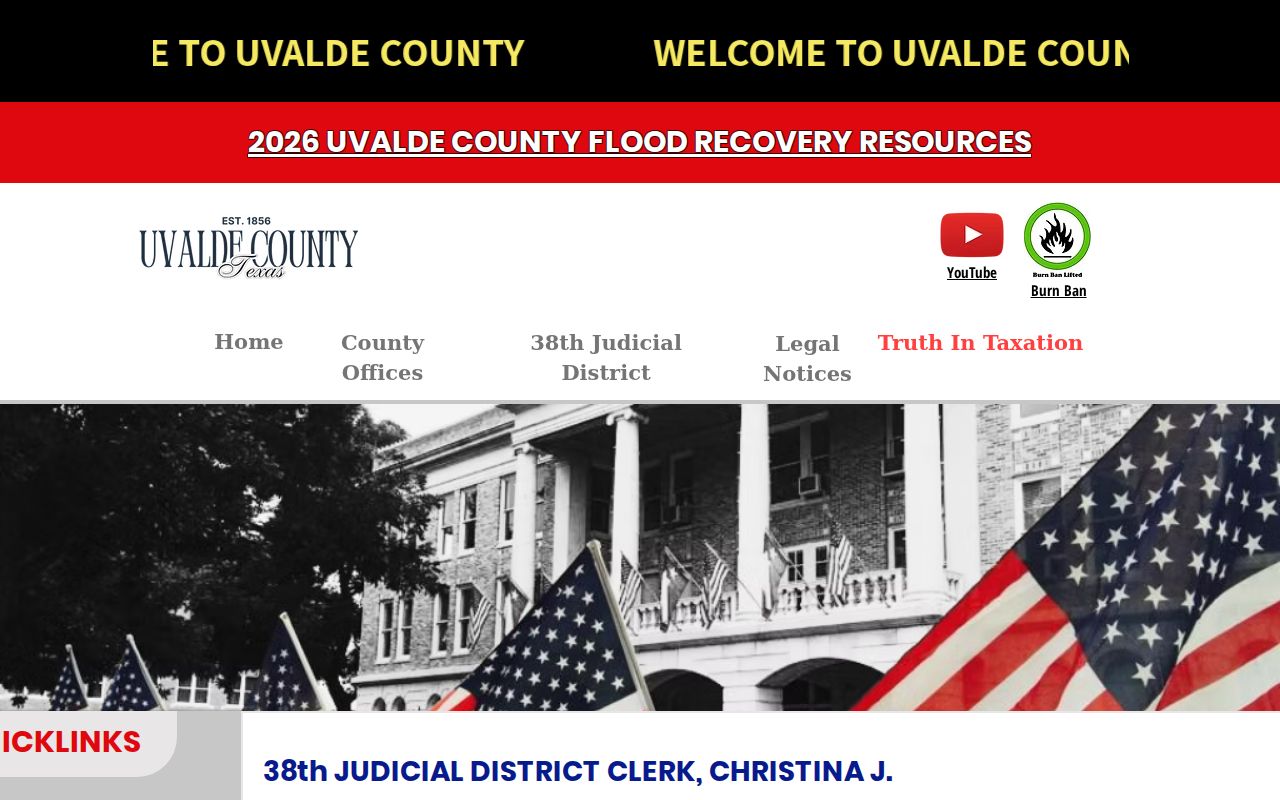
That page is the best place to confirm current details before you ask for a docket sheet or visit the public station.
What a Criminal Docket Shows
A Uvalde County felony docket names the court, the cause number, the case style, and the filing date. The charge category and status appear as well. Events then follow in date order. Entries may show an indictment, bond, counsel appointment, discovery, or motion. They may also list a setting notice, reset, plea, trial, judgment, sentence, or appeal. Displays vary by system. One caution: an entry does not always include the filed document itself.
| Case identity | Cause number, court, filing date, judge, style, type, and active or disposed status. |
|---|---|
| Charge | Offense, cited law, classification, and related charge data when public. |
| Parties and counsel | The State, defendant role, and attorney information where provided. |
| Settings | Date, time, place, judge, setting label, and reset history when published. |
| Outcome | Plea, verdict, dismissal, deferred adjudication, sentence, judgment, or appeal. |
| Documents | Images may be public, preview-only, fee-based, secured, or withheld. |
Use full terms rather than guessing that a short code carries one fixed local meaning.
Uvalde County Criminal E-Filing
Criminal filings run through eFileTexas. re:SearchTX adds a separate access layer for eligible records. Filing is not searching. A filer submits material, the clerk accepts it into the court record, and the public later sees only the data or documents the court's rules allow.
Uvalde County's criminal filing notice flags one local quirk. The two-dollar criminal e-filing fee is waived. The filer must select the waiver payment type, because the clerk cannot remove the fee after submission. Pick the wrong payment choice and the filing comes back for correction. That return is a filing event, not a ruling on the charge.
The official 38th District Court rules, forms, and standing orders provide the local source context.
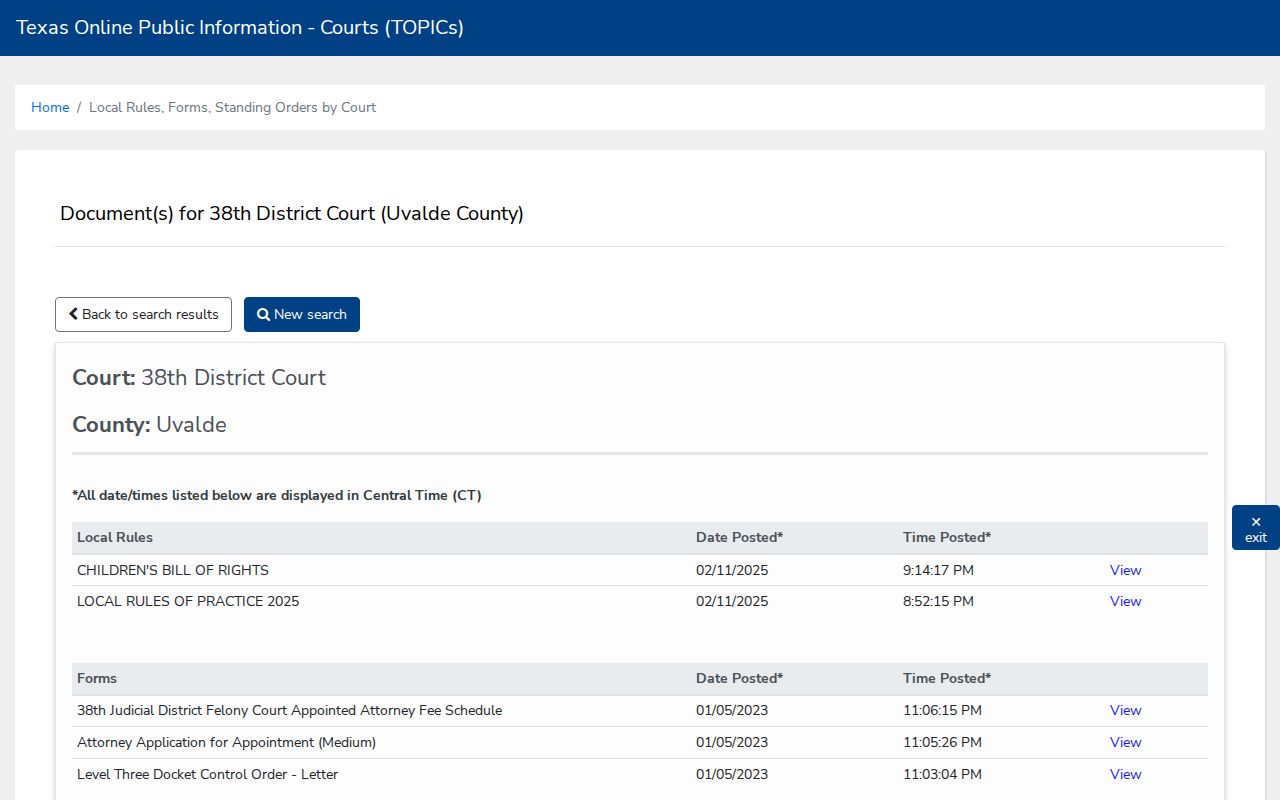
Among the listings is a standing discovery order for felony cases. It helps explain discovery entries that appear on the docket before a plea or trial.
Stages on a Criminal Docket
The broad line is Filing → Arraignment → Pretrial → Plea or Trial → Disposition → Sentencing. An actual Uvalde County criminal docket can add bond events, counsel appointments, discovery orders, continuances, and post-judgment work. The latest signed order or confirmed coordinator entry controls the live setting, not a past notice that remains in the chronology.
- Arraignment
- The charge is addressed and plea or rights steps may be recorded.
- Capias
- A court order authorizing custody under the conditions shown in the case.
- Deferred adjudication
- A supervised result in which the judge defers a finding; completion or revocation can change the record.
- Disposition
- The recorded result or status that ends the case or charge.
- Bond forfeiture
- A proceeding tied to an alleged failure to meet a bond or appearance duty.
A dismissal ends prosecution without a conviction on that entry. An acquittal follows a not-guilty result. A nolle prosequi means the State abandoned the case. When you need proof, check the judgment or order itself.
Uvalde County Criminal Court Levels
The offense level decides which court holds the docket. Search only the District Clerk and you can miss a valid county, justice, or city case. Uvalde County has one constitutional County Court, five listed justice precincts, and municipal courts in Uvalde and Sabinal, plus the district layer.
| Case level | Holding court | Starting contact |
|---|---|---|
| Felony | 38th District Court | District Clerk, (830) 278-3918 |
| Class A or B misdemeanor | Constitutional County Court | County Clerk, (830) 278-6614 |
| Class C or county traffic | Applicable justice court | Precinct shown on citation |
| City ordinance or traffic | Uvalde or Sabinal Municipal Court | City clerk shown on citation |
The official JP directory identifies the five justice offices.
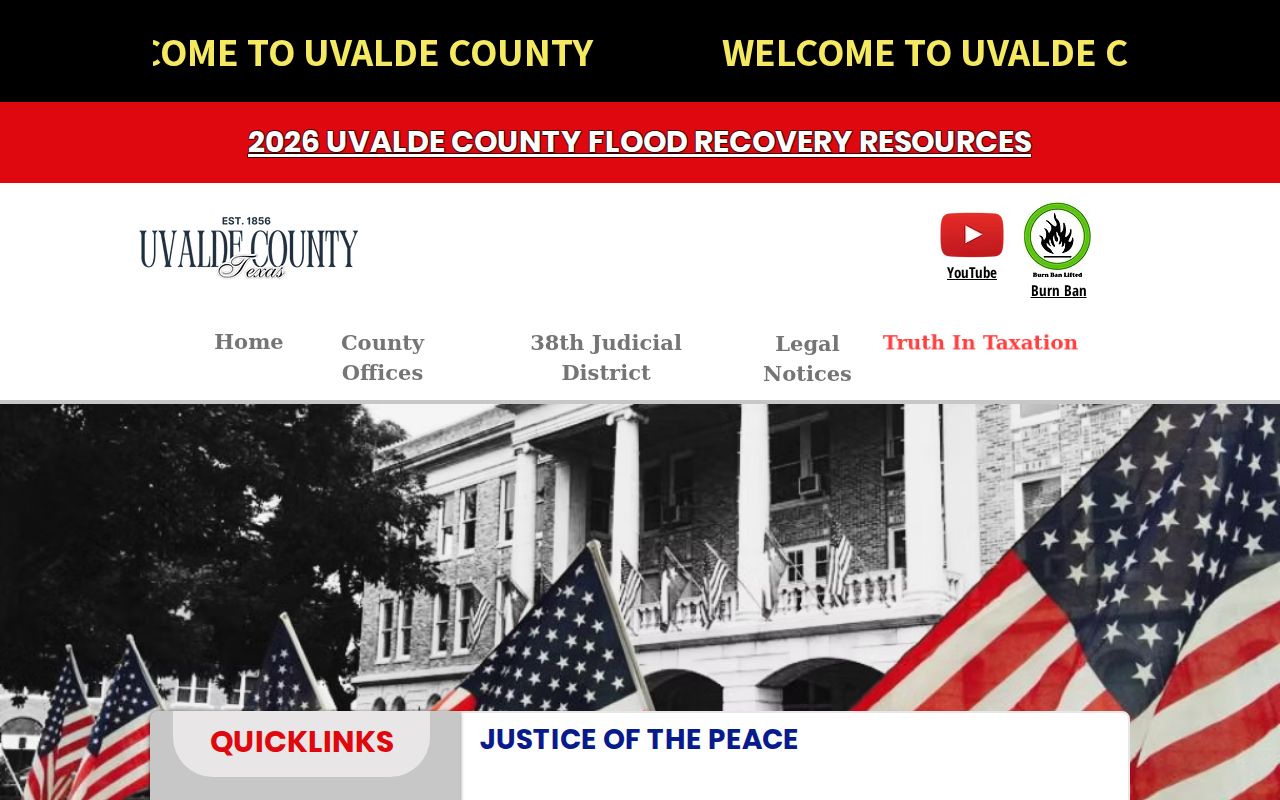
Those office cards route a Class C record to the precinct that keeps it.
Which Court Holds Criminal Dockets
The 38th District Court holds the main felony docket. The constitutional County Court handles Class A and B misdemeanors. Justice and municipal courts hear fine-only and traffic matters within their authority. A case may later create an appellate record. The trial docket begins with its originating clerk.
Uvalde County district appeals go to the Fourth Court of Appeals in San Antonio. Above that sits the Texas Court of Criminal Appeals, the state's final criminal court. As the file moves through review, expect a notice of appeal. A clerk's record and a reporter's record follow. A mandate comes last.
A city citation portal will not surface a felony. A district result cannot stand in for a JP file either. The court named on the source paper is your safest clue.
Older Uvalde County Criminal Dockets
An old case can be missing online yet still exist in the clerk's holdings. The District Clerk preservation plan inventories bound minute books, criminal indexes, case folders, docket sheets, and restored or scanned volumes. It counts more than 290 books across record groups. It also describes digitization work plus a public viewing station.
Give the clerk a cause number when you can. Otherwise supply the full name, the approximate year, and the court. Add the document you want. Ask whether an index, minute book, docket sheet, judgment, or scanned folder is the best source. A screen view is not a certified disposition. Formal proof comes only from the office holding the original case.
Historical indexing can differ from modern portal fields. Alternate spellings and a year range may help the clerk locate the record.
Public Access and Sealed Criminal Dockets
Plenty of Uvalde County criminal docket entries sit in public view. Still, the openness has limits. Juvenile files, sealed or expunged matters, victim details, and sensitive identifiers may be hidden. Some may be partly blacked out. So a docket search that returns nothing does not prove the case is gone. The miss could come from checking the wrong clerk. It could stem from an older filing, gaps in data sharing, or a law that bars access.
Key access rules:
Texas Rule of Judicial Administration 12 generally opens covered judicial records not excluded by its terms.
Texas Government Code Chapter 552 recognizes that judiciary information follows Supreme Court rules or other law.
Texas Family Code Chapter 58 limits access to juvenile records.
re:SearchTX works on roles. The source court sets the rules. A restricted file is not always out of reach, though. An authorized person should contact the originating clerk. That office can explain the governing order and how to request access.
Missing Uvalde County Criminal Results
Start by double-checking the court level and the name spelling. Then run the cause number through the proper route and re:SearchTX. A current felony question goes to the District Clerk at (830) 278-3918. Need a live 38th District Court setting? Call the coordinator at (830) 278-3913. Misdemeanor inquiries belong to the County Clerk at (830) 278-6614. Calendar details come from the County Court coordinator at (830) 591-9223. Traffic and Class C records live with the JP or municipal clerk. That clerk is named on the citation. The Office of Court Administration puts out statistics, not individual case files. Also keep a public docket apart from a state criminal-history product. When you need an official result, trust the judgment. Or trust the certified record from the proper Uvalde County custodian of court records.